Guide
How PVC Pipe Is Made: The Extrusion Process, Step by Step
From resin and additives to a finished, marked pipe — the compounding, extrusion, sizing and cooling stages that turn PVC powder into pressure pipe.

Dr. Wei Liu, P.E.
Senior Engineering Manager · Primepoly
Published: Jul 7, 2026
Updated: Jul 7, 2026
8 min read
TL;DR
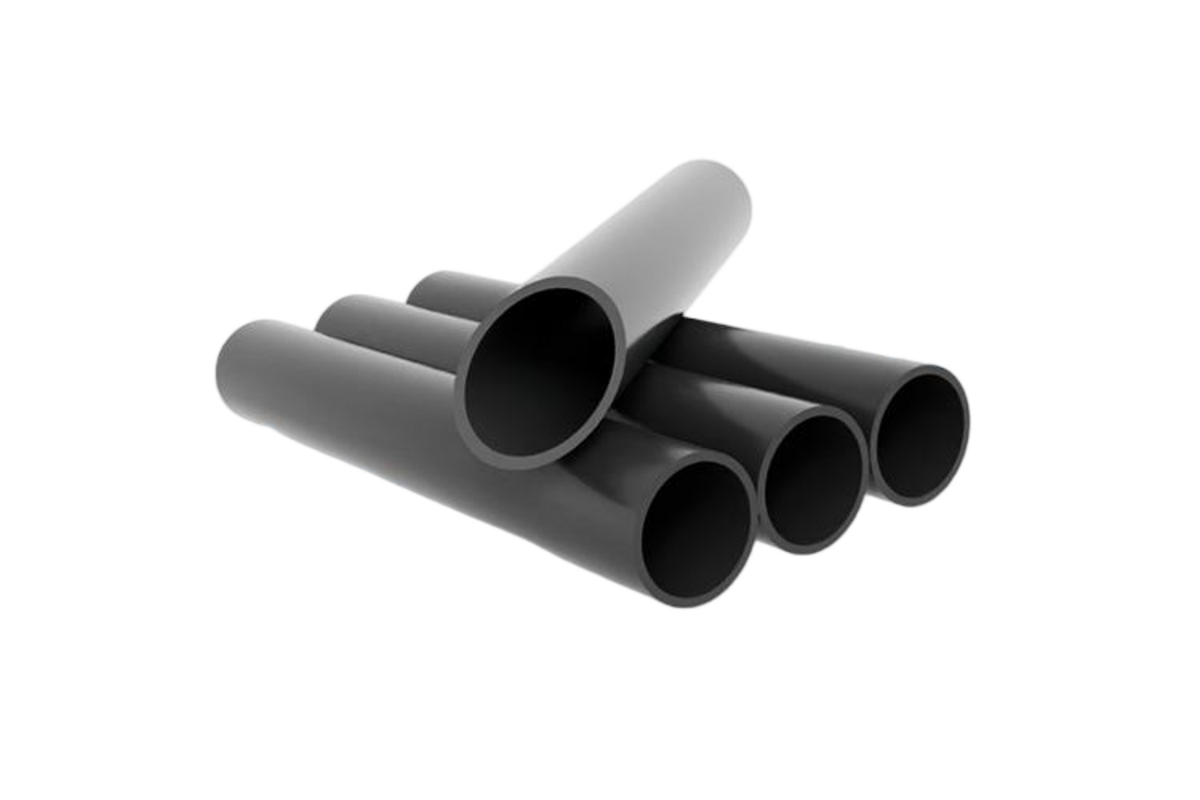
PVC pipe is made by extrusion: PVC resin is dry-blended with stabilisers, lubricants and pigments, melted at about 170–190 °C, forced through an annular die, vacuum-sized, water-cooled, marked and cut. The die and the vacuum-sizing stage set the diameter and wall thickness — and therefore the pipe's pressure class.
A finished PVC pipe starts life as a white powder. Turning that resin into a straight, dimensionally precise pressure pipe is a continuous extrusion process — a carefully controlled sequence of compounding, melting, shaping, sizing and cooling. Here's how each stage works, and where quality is won or lost.
The process at a glance
PVC pipe extrusion is a continuous line: compound goes in at one end as powder and comes out the other as marked, cut lengths of pipe. Six stages do the work.
The stages in detail
Each stage feeds the next, so the line runs at a steady, matched speed. Getting the melt temperature and the sizing vacuum right is what keeps every metre inside tolerance.
- Compounding (dry blend): PVC resin is mixed with heat stabilisers, lubricants, pigments and any fillers in a high-speed mixer so every particle is evenly coated. This recipe sets the pipe's colour, strength and weathering.
- Feeding: the dry blend is metered from a hopper into the extruder at a controlled rate to keep production steady.
- Plasticising / melting: rotating screws heat and shear the compound to about 170–190 °C, melting it into a homogeneous, gel-free mass without burning.
- Extrusion through the die: the melt is forced through an annular die that forms the tube. The die sets the outside diameter and wall thickness — and therefore the schedule.
- Vacuum sizing & cooling: the hot pipe passes through a vacuum sizing tank that fixes the outside diameter, then water baths cool and solidify it with a smooth finish.
- Marking & haul-off: a caterpillar haul-off pulls the pipe at constant speed while a printer marks size, standard and batch data along the wall.
- Cutting, socketing & packing: the pipe is cut to length, one end is often belled (socketed) for solvent-weld jointing, then it is bundled and packed.
What goes into PVC pipe
PVC pipe is not just resin. The additive package — small in quantity, large in effect — is what makes the pipe durable, weather-resistant and safe for its duty.
- PVC resin — the base polymer, typically 80–90% of the compound.
- Heat stabilisers — protect the polymer from degrading at melt temperature (calcium-zinc for potable-water grades).
- Lubricants — control flow and prevent sticking to the screw and die.
- Pigments — colour and UV protection (e.g. titanium dioxide for white).
- Fillers / processing aids — tune stiffness, impact strength and surface finish.
Quality control
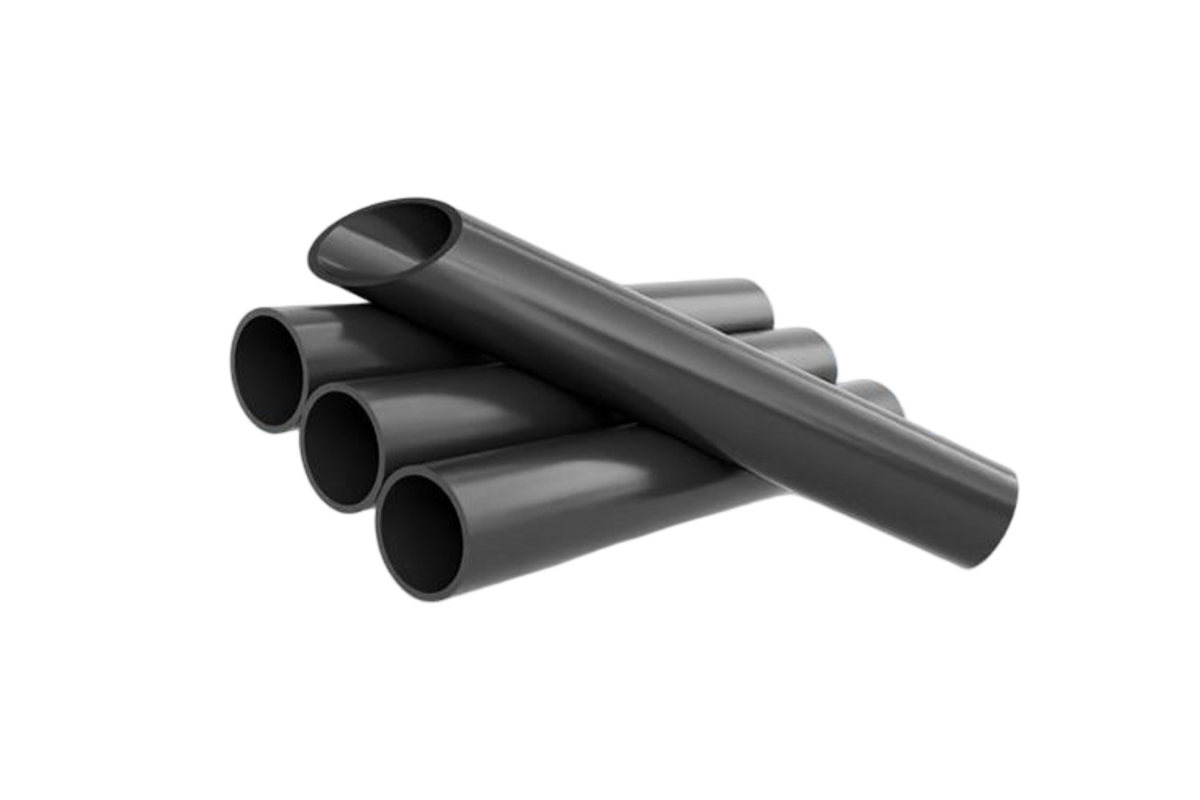
A reputable line checks the pipe continuously and by batch: outside diameter and wall thickness by laser/ultrasonic gauges on the line, plus laboratory tests for pressure (hydrostatic), impact, and — for potable grades — health-effects and residual vinyl chloride monomer.
The bottom line
PVC pipe quality is built in at the compound and set at the die. A good pipe comes from a clean, correctly stabilised recipe, a well-controlled melt, and tight dimensional control through sizing and cooling — then verified by hydrostatic and (for water) health-effects testing. When you buy from a real manufacturer rather than a trader, you are buying that process control.
References & standards
- [1]ASTM International — ASTM D1784 — Rigid PVC and CPVC compounds
- [2]ASTM International — ASTM D1785 — PVC plastic pipe, Schedules 40/80/120
- [3]ISO — ISO 1452 — PVC-U piping systems for water supply
- [4]Plastics Pipe Institute (PPI) — Handbook of PVC Pipe (manufacture chapter)
- [5]PVC Pipe Association (Uni-Bell) — PVC pipe manufacturing & QA resources
Frequently asked questions
Need expert advice on your project?
Our engineering team helps utilities, contractors and EPCs specify the right pipe material and SDR for their project. Get a no-obligation technical consultation.
Talk to an engineer