Comparison
CPVC vs PVC: Temperature, Chemical & Pressure Differences Explained
The chlorine that separates CPVC from PVC — how the two compare on heat, pressure, chemicals and fire, and which to specify.

Dr. Wei Liu, P.E.
Senior Engineering Manager · Primepoly
Published: Jul 6, 2026
Updated: Jul 6, 2026
10 min read
TL;DR
PVC and CPVC look alike, but CPVC's extra chlorine lets it handle much higher temperatures — about 93 °C vs 60 °C — and more aggressive chemicals. Use PVC for cold water, drainage and general service; use CPVC for hot water, hot chemical process and fire-sprinkler lines. The two are not solvent-weld compatible with each other.
PVC and CPVC are close relatives that are easy to confuse — and expensive to mix up. Both are rigid, corrosion-free chlorinated plastics that solvent-weld and resist a wide range of chemicals. The difference is temperature: CPVC handles hot fluids that would soften PVC. This guide compares the two on heat, pressure, chemical resistance, fire and cost, and shows exactly when each is the right call.
What's the difference — the chlorine
CPVC (chlorinated polyvinyl chloride) is PVC that has been chlorinated: extra chlorine atoms are bonded onto the polymer chain. That single change raises the temperature and chemical limits significantly, at a higher material cost. Everything else — corrosion immunity, smooth bore, solvent-weld jointing — is broadly similar.
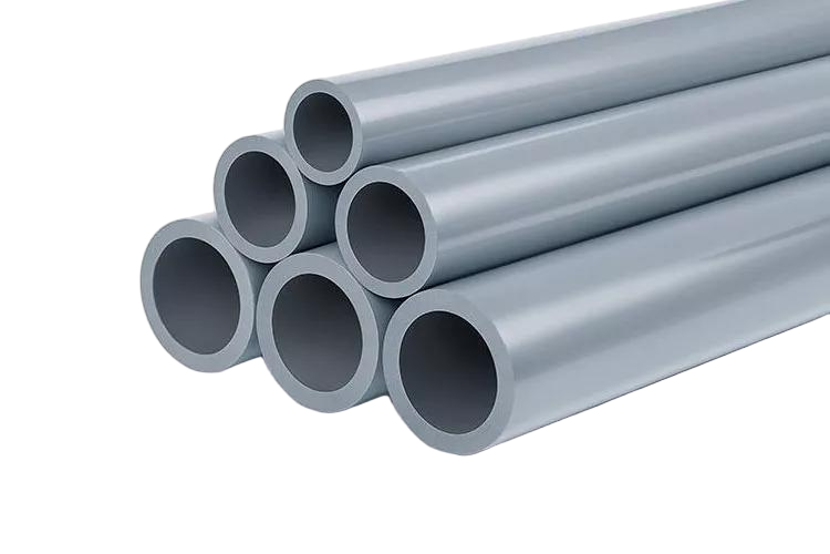
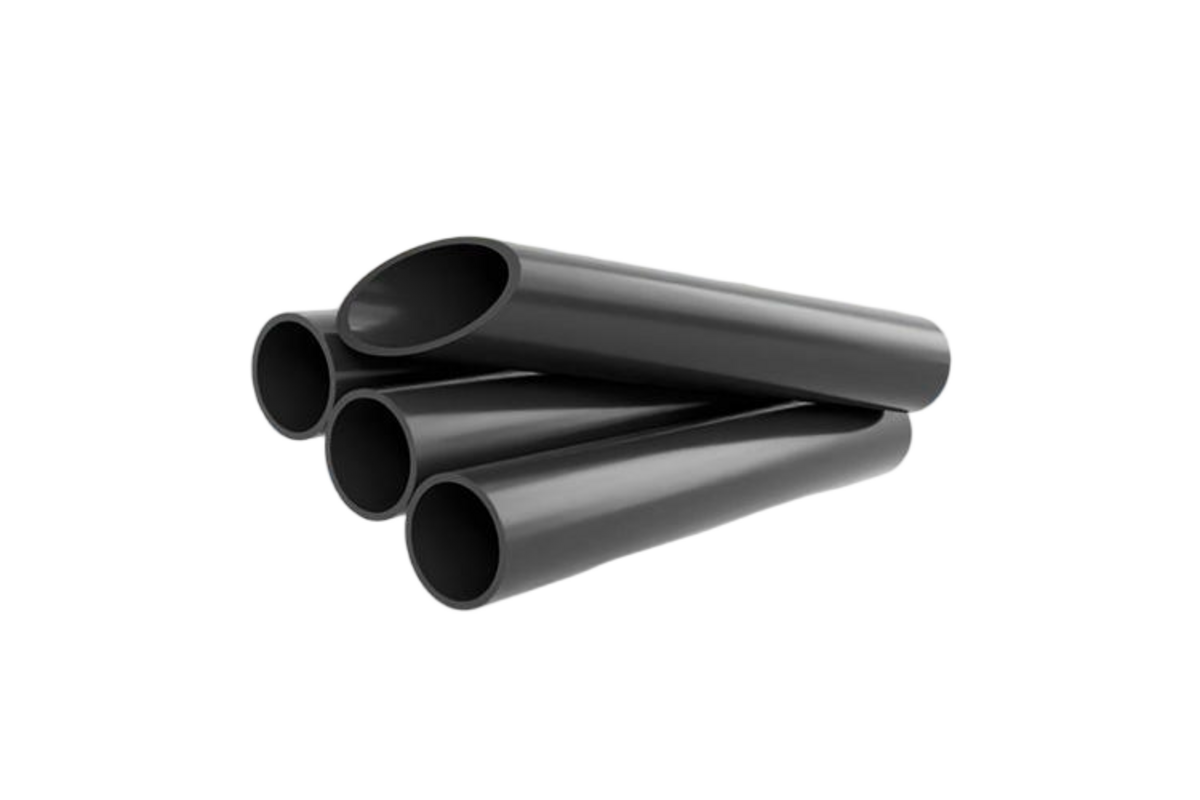
Visually they differ by colour: PVC is usually white or dark grey, CPVC is typically off-white/beige or light grey. Critically, they use different solvent cements and are not compatible with each other's cement — using PVC cement on CPVC (or vice versa) is a common and costly field mistake.
PVC vs CPVC — side by side
The table below summarises the engineering differences. The headline is temperature: CPVC's usable service temperature is roughly 33 °C higher than PVC, and it holds pressure far better when hot.
| Property | PVC-U | CPVC |
|---|---|---|
| Max continuous service temperature | ~60 °C (140 °F) | ~93 °C (200 °F) |
| Pressure at elevated temperature | Drops sharply above ~40 °C | Holds pressure much better when hot |
| Chemical resistance | Very good (acids, alkalis, salts) | Better for aggressive & hot chemicals |
| Fire performance | Self-extinguishing | Higher ignition temp, lower smoke |
| Typical colour | White / dark grey | Beige / light grey |
| Relative material cost | Lower | Higher (~1.5–2×) |
| Solvent cement | PVC cement | CPVC cement (not interchangeable) |
Source: Typical PVC-U / CPVC compound ratings
Chemical resistance — and CPVC's weak spot
Both PVC and CPVC resist a wide range of acids, alkalis and salt solutions at ambient temperature, which is why both are used in water treatment, plating and chemical dosing. CPVC extends that resistance to higher temperatures and to more aggressive oxidisers. But CPVC has one notable weakness worth flagging.
When to choose PVC
- Cold-water supply, irrigation and distribution up to about 40 °C.
- Drainage, waste and vent (DWV) and sewer.
- General industrial and chemical service at ambient temperature.
- Cost-sensitive pressure pipework where temperatures stay moderate.
When to choose CPVC
- Hot-water distribution and hot-water plumbing.
- Hot chemical process, plating and industrial fluids above ~40 °C.
- Fire-sprinkler systems — higher ignition temperature and low smoke.
- Any pressurised line that runs warm, where PVC would lose its rating.
The bottom line
If the fluid stays cool (below ~40 °C), PVC does the job at a lower cost. Once it runs hot — hot water, hot process, or where pressure must hold at elevated temperature — CPVC's extra chlorine earns its premium. Never mix their cements, and for anything above ~93 °C or high-pressure hot duty, move up to a material like PP-R or HDPE. Confirm chemical compatibility for the exact medium before you specify.
PVC / CPVC glossary
- PVC-U (uPVC)
- Unplasticised (rigid) polyvinyl chloride — the standard PVC pressure and drainage pipe material, rated to about 60 °C.
- CPVC
- Chlorinated polyvinyl chloride — PVC with extra chlorine for higher temperature (~93 °C) and chemical resistance.
- Service temperature
- The maximum continuous temperature at which the pipe holds its rated performance; the key differentiator between PVC and CPVC.
- Pressure de-rating
- The reduction in allowable pressure as temperature rises — much steeper for PVC than for CPVC.
References & standards
- [1]Corzan (Lubrizol) — What is the difference between CPVC and PVC?
- [2]Oatey — What is the difference between PVC and CPVC?
- [3]ASTM International — ASTM F441 — CPVC plastic pipe, Schedules 40 and 80
- [4]ASTM International — ASTM D1784 — Rigid PVC and CPVC compounds
- [5]ASTM International — ASTM D1785 — PVC plastic pipe, Schedules 40/80/120
- [6]Plastics Pipe Institute (PPI) — Thermoplastic pipe technical resources
Frequently asked questions
Need expert advice on your project?
Our engineering team helps utilities, contractors and EPCs specify the right pipe material and SDR for their project. Get a no-obligation technical consultation.
Talk to an engineer